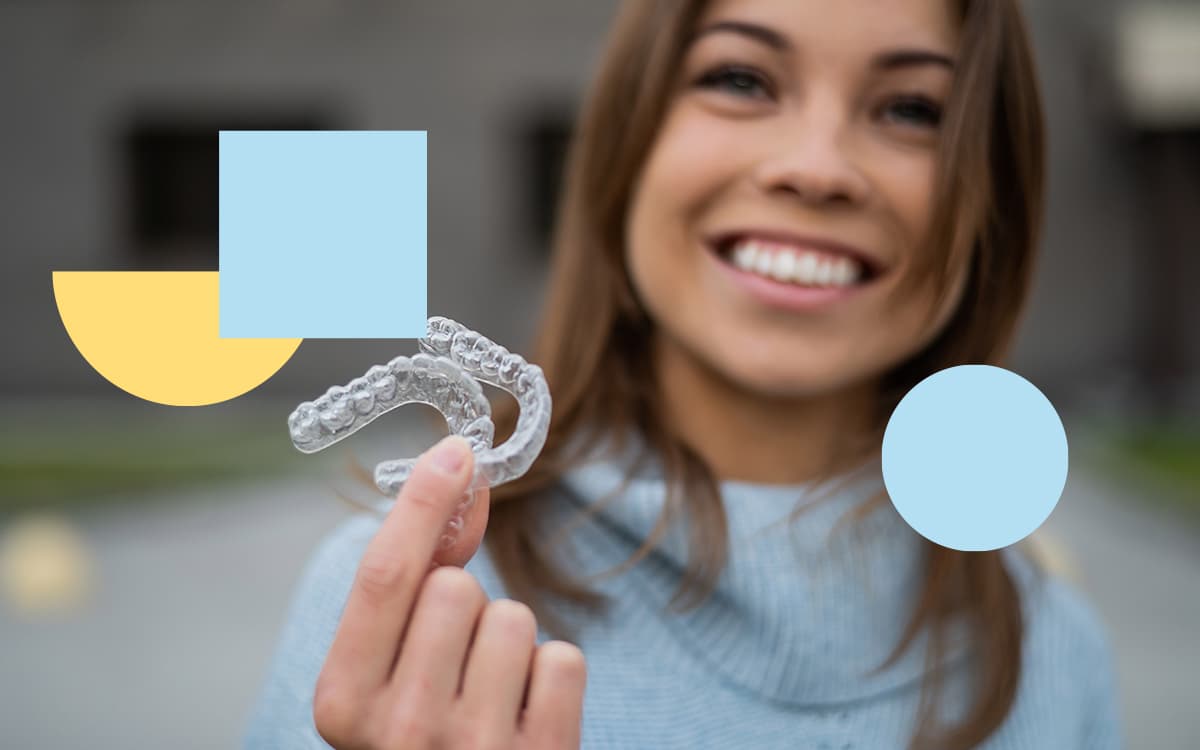
The use of invisible aligners has become the preferred option for orthodontic treatment in recent years. More and more children, young people and adults are seeking to correct the position of their teeth using this innovative system.
Invisible orthodontics offers many advantages, but it also involves a very specific type of care. Do you know how to take care of it and at the same time achieve complete dental hygiene? how to take care of it and at the same time achieve a complete dental hygiene? We tell you all the details.
How to keep aligners clean and prevent plaque build-up and tooth decay
One of the main advantages of invisible orthodontic treatment is that it consists of the placement of transparent aligners, which are practically imperceptible. In order for the the splints maintain their initial appearance it is necessary to pay special attention to dental hygiene and to the daily cleaning and maintenance of these.
The more the aligners are cared for, the more transparent they will remain, and the more discreet they will be to the eyes of others. If they are not cleaned properly, in addition to changing their color, the likelihood of food debris accumulating on the teeth and gums increases. food debris accumulates on the teeth and gums, causing problems such as bad breath.causing problems such as bad breath, the formation of biofilm, etc. biofilmand the appearance of caries or periodontal disease.
This type of treatment facilitates the practice of good oral hygiene habits, even more so than with other treatments. other orthodontic treatments. Maintenance of invisible orthodontics is simple.. It can be completely removed and cleaned separately, favoring tooth brushing.
What care and precautions should we take when using invisible aligners? Here are some recommendations to keep in mind:
Do not consume food or drink while wearing aligners.
Eating with invisible orthodontic treatment is more comfortable than with other types of orthodontics because the splints are removed to facilitate chewing. It is important that never drink beverages with the braces on, except for water, as they may stain or deteriorate.
Washing invisible braces daily
Even when removed for eating and drinking, aligners accumulate dirt. For this reason, they should be cleaned daily, making sure that they are completely free of debris. For cleaning, it is recommended to use soap and water or effervescent tablets for daily use., never a toothpaste. The best time for cleaning is just before meals.
Respect the change of set of aligners.
Orthodontists who are experts in invisible orthodontics stress the need to respect the need to change the set of invisible braces when appropriate. This is usually every 7 to 15 days, according to the specialist's Indications in order to achieve the alignment results of the dental pieces in the stipulated time.
How to maintain good oral hygiene while wearing invisible aligners
In addition to washing them frequently, it is of utmost importance to maintain dental hygiene. Keep in mind that the splint is in direct contact with the teeth and gums for many hours a day, and this may favor the formation and developmentand this could favor the formation and development of biofilm. biofilm microbial biofilm.
Avoid the problems of halitosis, cavities and gum inflammation associated with the use of invisible aligners with these steps in your daily dental hygiene routine: Maintain a healthy mouth with daily care routines.
Discover our products for daily oral care

Complete tooth brushing
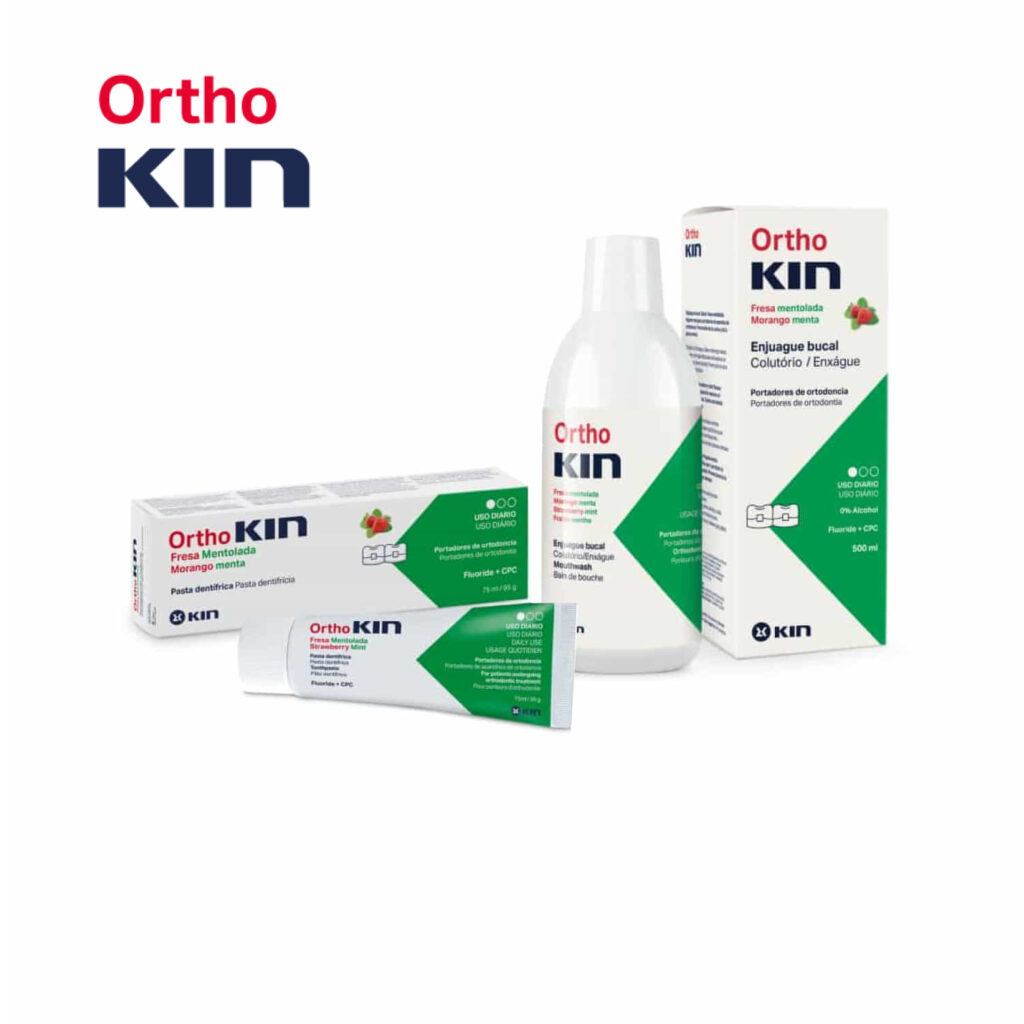
After eating or drinking, before putting the invisible splints back in place, you should brush your teeth to remove all debris. brush your teeth to remove all traces of the invisible splints.. Use a toothpaste toothpaste such as OrthoKINindicated for users with a higher risk of dental plaque accumulation such as orthodontic wearers. orthodontic wearers.
The OrthoKIN® Toothpaste Strawberry minted contains 0.05% cetylpyridinium chloride, which helps to control the accumulation of dental plaque even in hard-to-reach areas of the oral cavity. In its composition we also find provitamin B5vitamin E acetate and sodium fluoride to prevent caries, strengthen tooth enamel and gums.
Use of dental floss or interdental brushes
To ensure that no food debris remains in the interdental spaces, don't forget to floss or use interdental or help yourself with interdental brushes.
Use of Mouthwash
As a last step to complement dental hygiene, the OrthoKIN Strawberry rinse minted eliminates the risk of caries and strengthens the enamel..
It is an oral hygiene product specifically for orthodontic appliance wearers, containing sodium fluoride, cetylpyridinium chloride, provitamin B5 and vitamin E acetate, to control the accumulation of dental biofilm and protect the gums at the same time.
How to brush and rinse invisible aligners correctly
With constant use, invisible braces accumulate food debris, saliva and bacteria, which find an ideal environment to proliferate. Avoid the risk of damage to teeth and gums by correctly maintaining the aligners.
In addition to brushing the splints just before repositioning them, it is very important that you once a week to perform a thorough cleaning of these removable appliances.. For this purpose, the use of a suitable descaling solution is of great help.
If you have decided on invisible invisible orthodontics to correct the position of your teeth, make the most of the many benefits and facilities it offers.
Achieve a perfect and healthier smile with good dental hygiene and precise care of your invisible aligners.You will notice the difference!
 How to relieve pain with newly placed braces?
 How to keep your breath fresh?
 10 Tips to take care of the oral health of the little ones