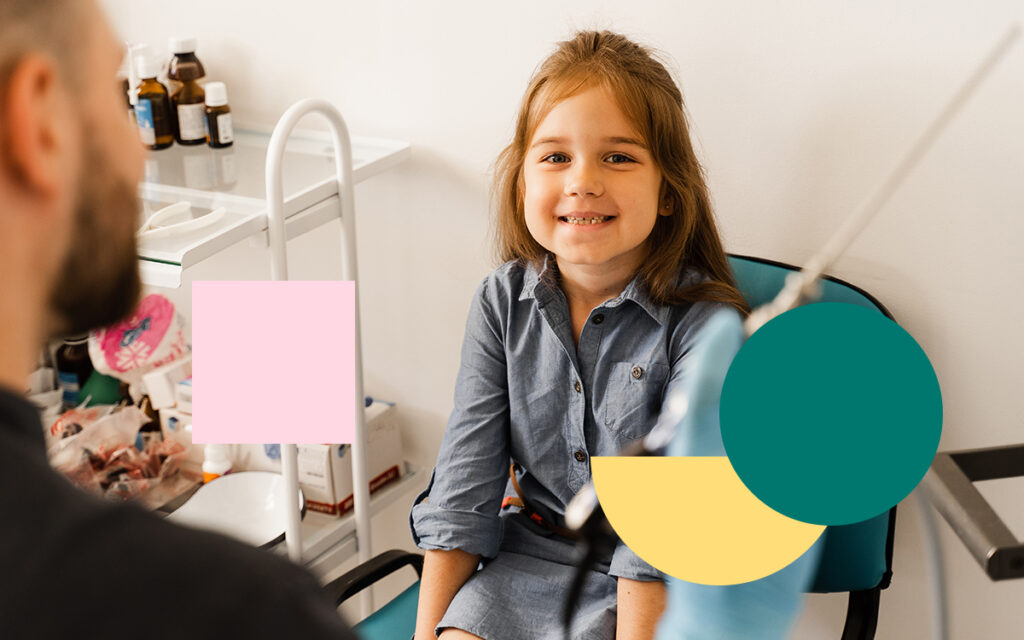
Baby teeth are more susceptible to cavities and other dental problems, so it’s important to choose appropriate oral care products based on age and dental development facilitates the transition to permanent teeth. Regular visits to the pediatric dentist, starting at 6 months of age, allow for the correction of habits and the application of appropriate treatment at each stage.
Oral Health in Early Childhood
The World Health Organization (WHO) notes that dental caries is the most common chronic disease in childhood, affecting between 60% and 90% of school-age children. Early childhood caries (ECC) appears in baby teeth before the age of 6 and can rapidly destroy the tooth crown.
Other common problems in children under 6 include malocclusions and dental trauma related to prolonged sucking habits, poor nutrition, and poor oral hygiene. Therefore, children’s oral health should not focus solely on preventing or treating oral diseases, but must also play a significant role in the maintenance of teeth, gums, and soft tissues.
Good oral hygiene benefits various aspects of children's development:
- Proper chewing: Primary teeth help grind food, contributing to good digestion and balanced nutrition.
- Phonetic development: Baby teeth are important for pronouncing words and sounds correctly.
- Prevention of malocclusions: Premature loss of primary teeth can disrupt the eruption and alignment of permanent teeth.
For proper care, it is important choose age-appropriate oral hygiene products and to provide constant supervision to help develop healthy habits from an early age. An effective oral hygiene strategy for children should include both educating parents and caregivers and early professional supervision through regular visits to a pediatric dentist.
Stages of childhood dental development
The stages of dental development are divided into primary dentition and the transition to mixed dentition. It is important to keep these stages in mind, along with the three pillars of children’s oral hygiene: regular brushing, proper use of fluoride products, fluoride dietary control.
1. Primary teeth
This phase begins around 6 months of age with the eruption of the lower incisors and ends around age 3 with the appearance of the second molars. These primary teeth have structural and physiological functions: chewing, speech development, and maintaining space for the permanent teeth.
2. Transition to mixed dentition
Starting at age 6, baby teeth begin to be gradually replaced by permanent teeth. At this stage, it is essential to maintain a strict oral hygiene routine and use fluoride products fluoride prevent cavities and structural defects in the enamel.
Toothbrushing for children under 6
Brushing is the foundation of oral care. For children, it should be adapted to their psychomotor development and always be done under adult supervision to prevent them from swallowing fluoride toothpaste.
1. Ages 0–3
At this stage, it is important to focus on cleaning gums and first teeth using silicone teething rings, which also help relieve teething discomfort, or baby toothbrushes. These feature small heads, soft bristles, and short handles so parents can guide the process.
Brushing should be soft. All surfaces should be brushed as soon as the first tooth appears. As for toothpaste, it should contain fluoride 1000 ppm), and only a small amount—about the size of a grain of rice—should be used.
2. Ages 3 to 6
Since children begin to develop motor independence at this stage, they can start to actively participate in brushing while still under adult supervision. A children’s toothbrush with a non-slip handle and ergonomic design should be used; you can also try age-appropriate electric toothbrushes for better and faster cleaning.
Brushing should be done using circular or short sweeping motions, covering the outer, inner, and chewing surfaces. The toothpaste varies slightly. Ideally, it should contain between 1000 and 1450 ppm of fluoride , and the amount used should be about the size of a pea.
Other children's oral care products
Dental floss, children's mouthwash, interdental brushes, and tongue scrapers can complement the basic children’s oral hygiene routine, provided that the pediatric dentist recommends them and they are used properly.
1. Dental floss
They are recommended for children around 2 or 3 years old, when their teeth begin to touch. Floss with Y- or U-shaped handles are designed for small hands and come in flavored or unflavored varieties. Ideally, they should be used once a day, preferably before the nightly brushing routine, and—very importantly—under supervision to prevent gum injury.
2. Children's mouthwashes
This Mouthwash recommended for children ages 5 or 6 and older, as by that age children are able to rinse and spit properly without swallowing the product.
3. Interdental brushes and tongue scrapers
Interdental brushes can be used on the recommendation of a pediatric dentistand under parental supervision if the child has wide gaps between their teeth. Tongue scrapers may be appropriate for bad breath.
| Age | Main product | Amount or method | Frequency |
| 0 to 6 months | Children's toothbrush or silicone finger toothbrush | Cleaning the gums before teeth erupt and around the corners of the mouth | once a day |
| 6 to 18 months | Children's toothbrush or silicone finger toothbrush and fluoride toothpaste (1000 ppm) | Cleaning of all dental surfaces | twice a day |
| 18 months to 3 years | Children's toothbrush and fluoride toothpaste (1000 ppm) | Always under adult supervision | twice a day |
| Ages 3 to 6 | Manual or electric toothbrush for children with fluoride toothpaste (1000–1450 ppm) | Brushing teeth independently under adult supervision | twice a day |
At Laboratorios KIN a wide range of products specially formulated for the youngest members of the family, supporting their oral development from the very first months. From a gum balm to toothpastes and mouthwashes tailored to each stage, our products help strengthen teeth, prevent dental plaque, and promote healthy habits with pleasant flavors that make daily use easy.
In addition to the children's oral care products available, scheduling regular visits with a pediatric dentist starting at 6 months of age will help detect cavities and gum problems early, provide guidance on brushing techniques, and help choose the most appropriate products for each child. Specialists can also apply sealants or fluoride when necessary.
 Ortodoncia interdisciplinar: integración de especialidades médicas en el diagnóstico y tratamiento
 Kit de higiene para ortodoncia fija fuera de casa: qué productos llevar y cómo usarlos
 Recuperación de productos por tema de seguridad en España Fecha: 07/09/2026 FluorKIN Infantil Enjuague Bucal Sabor Fresa 500 ml Lotes: 26B01, 26B04, 26B05 y 26B06 (los tres últimos lotes corresponden a packs 2×1)